Editable Mental Health Forms for a More Protected, Audit-Ready Practice
Social Determinants of Health Treatment Plan Templates: A Practical Guide for Behavioral Health Providers
Social determinants of health can directly affect treatment engagement, progress, and outcomes. This educational guide explains how behavioral health providers can document SDOH concerns such as housing instability, food insecurity, transportation barriers, financial stress, healthcare access issues, and social isolation within a clear, clinically relevant treatment plan. It also shows how SDOH treatment plan templates can help clinicians save time, support care coordination, and create stronger documentation for Medicaid-facing and audit-conscious practices.
7/8/202616 min read
Social Determinants of Health Treatment Plan Templates: A Practical Guide for Behavioral Health Providers
Success in behavioral health care depends on more than diagnosis and intervention. It depends on understanding the full life situation of the person receiving care.
A client may present with depression, anxiety, trauma symptoms, substance use concerns, mood instability, or difficulty functioning. But those symptoms are often affected by the conditions surrounding that person’s life. Housing instability. Food insecurity. Transportation barriers. Financial hardship. Lack of social support. Limited healthcare access. Employment problems. Family conflict. Unsafe living conditions.
These are not small details.
They are often the reason treatment becomes difficult, inconsistent, or incomplete.
That is why social determinants of health treatment planning is becoming more important for behavioral health providers, Medicaid-facing organizations, community mental health agencies, therapists, counselors, social workers, case managers, and care coordination teams.
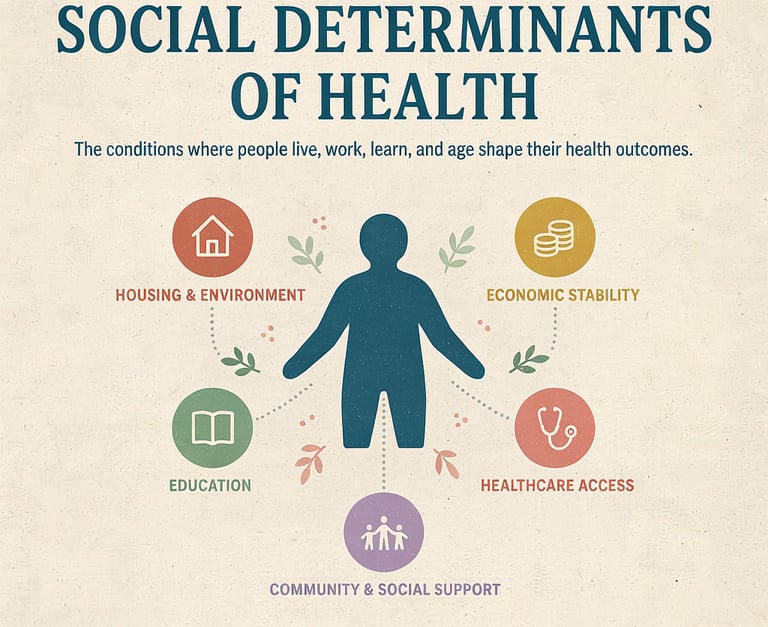
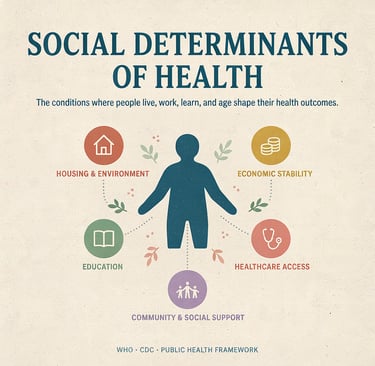
Social determinants of health, often called SDOH, are the conditions in which people are born, live, learn, work, play, worship, and age. These conditions influence health, functioning, quality of life, and treatment outcomes. Healthy People 2030 organizes social determinants of health into five major domains: economic stability, education access and quality, health care access and quality, neighborhood and built environment, and social and community context. (odphp.health.gov)
For behavioral health providers, the message is simple.
If social needs affect treatment, they should be documented in the treatment plan.
When housing instability increases anxiety, it belongs in the plan. When food insecurity affects mood and concentration, it belongs in the plan. When transportation barriers cause missed appointments, they belong in the plan. When financial hardship affects treatment engagement, it belongs in the plan. When social isolation worsens depression, it belongs in the plan.
This is where social determinants of health treatment plan templates can help.
A strong SDOH treatment plan helps clinicians turn real-life barriers into clear goals, measurable objectives, appropriate interventions, referrals, and care coordination steps. It helps providers move from general awareness to clear clinical action.
That is the purpose of a Social Determinants of Health Treatment Plan Forms Bundle.
It gives behavioral health providers practical language and structure so they can document social needs clearly, professionally, and efficiently.
What Are Social Determinants of Health?
Social determinants of health are the nonmedical factors that influence health outcomes. They include the social, economic, educational, environmental, and community conditions that shape a person’s ability to access care, participate in treatment, and improve functioning.
Common social determinants of health include:
Housing instability
Food insecurity
Transportation barriers
Unemployment
Financial hardship
Limited education
Low health literacy
Lack of insurance
Medication access problems
Unsafe neighborhoods
Social isolation
Family conflict
Caregiver stress
Discrimination
Limited healthcare access
Legal and community stressors
In mental health and behavioral health care, these factors can have a direct impact on symptoms and treatment outcomes.
A client who cannot afford medication may have difficulty stabilizing. A client who does not have transportation may miss appointments. A client who lacks safe housing may struggle with sleep, emotional regulation, and crisis prevention. A client who has no social support may have greater difficulty recovering from depression, trauma, grief, or substance use concerns.
The more complex the client’s life situation, the more important it becomes to document social needs in a clear and organized way.
This is not just better paperwork.
It is better care.
Why Social Determinants of Health Belong in the Treatment Plan
Many clinicians already ask about social needs during intake. They ask about housing, food, transportation, employment, family support, education, safety, and access to care.
But there is a common problem.
The information is often documented in the assessment, then disappears from the treatment plan.
The assessment may say the client has housing instability. The treatment plan may only say, “Client will reduce depression.” The assessment may say the client lacks transportation. The treatment plan may not mention appointment attendance, telehealth options, referral support, or care coordination. The assessment may identify food insecurity, but the plan may not include any related goal, intervention, or resource connection.
That creates a gap.
A social determinants of health treatment plan closes that gap.
It connects the client’s social needs to the clinical work being done. It shows how those needs affect symptoms, functioning, treatment participation, and progress. It gives the provider a way to document what they are doing in response.
A strong SDOH treatment plan answers important questions:
What social need has been identified?
How does it affect the client’s mental health or functioning?
How does it interfere with treatment engagement?
What goal is appropriate?
What intervention will the provider use?
What referral or care coordination step may be needed?
How will progress be reviewed?
This is why SDOH treatment plan templates are so valuable. They help clinicians create treatment plans that are clear, complete, and connected to the client’s real life.
Who Needs SDOH Treatment Plan Templates?
Social determinants of health treatment plan forms can be useful across many behavioral health and healthcare settings.
They are especially helpful for:
Behavioral health providers
Mental health therapists
Counselors
Social workers
Case managers
Psychiatric providers
Community mental health agencies
Medicaid behavioral health providers
Substance use treatment programs
FQHCs and community clinics
Integrated care teams
Care management programs
Population health programs
Health equity initiatives
Human service organizations
Whole-person care programs
These templates are especially valuable for providers who work with Medicaid clients or clients with complex social, behavioral, and medical needs.
Medicaid documentation often focuses on medical necessity, functional impairment, treatment goals, interventions, care coordination, and progress over time. When social determinants of health affect treatment participation or outcomes, those factors should be reflected in the treatment plan in a clear and clinically relevant way.
This does not mean every provider has the exact same requirement to document every SDOH domain. Requirements vary by state, payer, program, setting, accreditation status, and service type.
But the direction of healthcare is clear.
Social needs matter.
Whole-person care matters.
Care coordination matters.
Health equity matters.
Documentation quality matters.
And treatment plans should reflect the barriers that affect the client’s ability to improve.
Social Determinants of Health and Medicaid Documentation
For Medicaid-facing providers, documentation must be more than descriptive. It must be clinically meaningful.
It is not enough to write, “Client has housing problems,” or “Client lacks transportation.” The documentation should show how the issue affects treatment and what the provider is doing about it.
For example, housing instability may contribute to anxiety, sleep disturbance, emotional dysregulation, missed appointments, safety concerns, and difficulty following through with treatment recommendations.
Food insecurity may worsen depression, fatigue, irritability, concentration problems, and overall functioning.
Transportation barriers may lead to missed sessions, poor medication follow-up, and inconsistent treatment engagement.
Lack of social support may increase crisis risk, isolation, relapse vulnerability, grief symptoms, or difficulty maintaining progress.
A strong Medicaid behavioral health treatment plan should connect these issues to the client’s clinical needs.
Instead of writing:
“Client has transportation problems.”
A stronger treatment plan might say:
“Client will identify and use at least two reliable transportation options to improve appointment attendance and reduce treatment interruption related to transportation barriers.”
Instead of writing:
“Client is unemployed.”
A stronger treatment plan might say:
“Client will explore how depressive symptoms, anxiety, and employment instability interact, and will develop weekly coping and planning strategies to support increased functioning and vocational readiness.”
Instead of writing:
“Client has poor support.”
A stronger treatment plan might say:
“Client will identify at least two safe social supports or community resources to reduce isolation and strengthen recovery support.”
This is the difference between noting a problem and building a plan.
That is exactly where SDOH treatment plan examples and SDOH documentation templates help clinicians save time and improve quality.
SDOH, ICD-10 Z Codes, and Clinical Documentation
Social determinants of health are also connected to ICD-10-CM Z codes. CMS has published resources explaining that SDOH-related Z codes are found in categories Z55 through Z65 and may be used to document social needs such as housing instability, food insecurity, transportation barriers, employment concerns, education problems, economic hardship, and other psychosocial circumstances. (cms.gov)
Z codes are not a substitute for treatment planning.
They do not replace clinical judgment.
They do not automatically prove medical necessity.
But they can help capture social risk information in a structured way when appropriate.
For behavioral health providers, the bigger lesson is this: social needs are increasingly treated as meaningful health data. They can support care coordination, referrals, quality improvement, population health work, and health equity initiatives.
A well-written SDOH treatment plan supports this broader documentation picture by showing:
What social need was identified
How the social need affects care
What goal has been established
What intervention will be used
What referral or coordination step may occur
How progress will be monitored
This is why SDOH clinical documentation should be practical, specific, and easy to follow.
What Should an SDOH Treatment Plan Include?
A good social determinants of health treatment plan should do more than list social concerns. It should translate those concerns into clinical goals and action steps.
A strong SDOH-informed treatment plan may include:
The identified social need
The clinical or functional impact
A measurable treatment goal
Short-term objectives
Provider interventions
Client action steps
Referrals to community resources
Care coordination activities
Progress review language
Treatment plan update expectations
For example, if the client has housing instability, the plan should not simply say, “Client needs housing.” That may be true, but it is not a complete treatment plan.
A better plan explains how housing instability affects anxiety, sleep, safety, concentration, missed appointments, or emotional regulation. It may include referral coordination, coping strategies, safety planning, problem-solving, or support with community resource connection.
The same process applies to food insecurity, transportation barriers, financial hardship, unemployment, healthcare access problems, medication access issues, social isolation, caregiver stress, family conflict, unsafe living conditions, and low health literacy.
The goal is not to make the clinician responsible for solving every social problem.
The goal is to document the social need when it affects treatment and to show an appropriate clinical response.
Examples of SDOH Treatment Plan Goals
The following examples show how social determinants of health treatment goals can be written in clear, measurable, and clinically relevant language.
Housing Instability Treatment Plan Goal
Client will increase stability and safety by identifying housing-related needs, participating in referral planning, and developing coping strategies to manage anxiety related to housing insecurity.
Food Insecurity Treatment Plan Goal
Client will reduce the impact of food insecurity on emotional functioning by identifying available food resources and developing a weekly plan to support basic nutritional access.
Transportation Barriers Treatment Plan Goal
Client will improve treatment engagement by identifying reliable transportation options or alternative service access methods to reduce missed appointments.
Financial Hardship Treatment Plan Goal
Client will explore the relationship between financial stress and mental health symptoms while developing practical coping and problem-solving strategies.
Healthcare Access Treatment Plan Goal
Client will improve care continuity by identifying barriers to medical or behavioral health access and participating in coordination efforts to connect with appropriate services.
Social Isolation Treatment Plan Goal
Client will reduce isolation by identifying safe social supports, community resources, or structured activities that support emotional connection and recovery.
Health Literacy Treatment Plan Goal
Client will improve understanding of treatment recommendations by using plain-language education, asking questions during appointments, and identifying strategies to support follow-through.
Employment Barriers Treatment Plan Goal
Client will explore how symptoms affect vocational functioning and develop coping strategies to support job readiness, workplace stability, or referral to employment resources.
These examples can be adapted for therapists, counselors, social workers, case managers, psychiatric providers, and behavioral health teams.
The key is individualization.
Templates should guide the clinician. They should not replace clinical judgment.
Examples of SDOH Treatment Plan Interventions
Provider interventions may include:
Assessing how social needs affect symptoms and functioning
Providing psychoeducation about stress and mental health
Supporting problem-solving around treatment barriers
Referring to community-based resources
Coordinating with case managers or care teams
Encouraging connection to benefits or support programs
Helping the client identify safe social supports
Supporting appointment adherence planning
Using motivational interviewing when appropriate
Supporting safety planning when needed
Documenting progress toward social need-related goals
Reviewing barriers during treatment plan updates
If transportation barriers are affecting attendance, the clinician may help the client identify transportation options, explore telehealth when appropriate, coordinate with case management, or create a practical appointment planning strategy.
If food insecurity is affecting mood or functioning, the clinician may provide referrals, explore emotional barriers to seeking help, and document how the need affects treatment participation.
If social isolation is worsening depression, the provider may help the client identify safe support systems, structured activities, peer support, or community resources.
The clinician does not need to fix every social condition.
But the clinician should document the social condition when it affects treatment.
That is the practical purpose of SDOH treatment plan interventions.
Why Generic Treatment Plan Templates Are Not Enough
Many treatment plan templates focus almost entirely on symptoms and diagnoses.
They may include goals for depression, anxiety, trauma, grief, anger, mood instability, or substance use. Those are important. But they may not capture the full picture.
A client’s depression may be made worse by unemployment. Anxiety may be intensified by eviction risk. Trauma symptoms may be triggered by unsafe housing. Substance use recovery may be threatened by social isolation or unstable living conditions. Medication adherence may be affected by cost, transportation, or low health literacy.
If the treatment plan ignores these realities, the documentation may look incomplete.
Generic treatment plan templates often miss this layer.
Social determinants of health treatment plan templates help fill that gap.
They give providers practical language for:
SDOH assessment findings
Social needs in mental health treatment planning
Psychosocial barriers treatment plans
Functional impairment treatment plans
Care coordination documentation
Health-related social needs documentation
SDOH goals and objectives
SDOH treatment plan interventions
Medicaid behavioral health treatment plans
Audit-ready treatment plan documentation
This gives clinicians a better starting point.
It helps them document what is already clinically obvious, but often difficult to write quickly.
How SDOH Treatment Plans Support Audit Readiness
Audit-ready documentation is not about writing long notes.
It is about writing clear notes.
A treatment plan should show why the client needs services, what the provider is addressing, what goals are being pursued, what interventions are being used, and how progress will be measured.
When social determinants of health affect treatment, the record should make that connection visible.
A reviewer should be able to understand:
How transportation barriers affect appointment attendance
How housing instability affects safety or emotional regulation
How food insecurity affects mood or functioning
How financial hardship affects treatment participation
How lack of support affects recovery
How healthcare access barriers affect continuity of care
What referrals or coordination steps were offered
What progress will be reviewed over time
This is the value of an SDOH treatment plan bundle.
It helps standardize the process. It reduces missed opportunities. It gives clinicians language they can adapt. It supports consistency across teams. It helps ensure that social needs do not appear once in the assessment and then disappear from the plan.
For Medicaid providers and audit-conscious behavioral health practices, this can be especially helpful.
Social Determinants of Health in Mental Health Treatment Planning
Mental health treatment planning should reflect the client’s full clinical reality.
That includes symptoms, diagnosis, history, risk, strengths, preferences, culture, environment, and social context.
Social determinants of mental health may include:
Poverty
Housing instability
Homelessness
Food insecurity
Transportation barriers
Unemployment
Workplace instability
Low health literacy
Limited education
Unsafe neighborhoods
Lack of social support
Family conflict
Caregiver stress
Discrimination
Legal stressors
Healthcare access problems
Medication access issues
Insurance barriers
Technology barriers
Community violence
These factors can affect depression, anxiety, trauma symptoms, substance use, sleep, irritability, attention, emotional regulation, treatment engagement, relapse risk, and overall functioning.
A behavioral health SDOH treatment plan should not simply list these factors. It should explain how they affect care.
For example, a client experiencing homelessness may need treatment goals related to stabilization, coping skills, safety planning, care coordination, and connection to housing resources.
A client experiencing social isolation may need goals related to behavioral activation, safe support-building, communication, grief work, recovery support, or community connection.
A client with limited health literacy may need goals related to understanding treatment recommendations, asking questions, using reminders, or improving follow-through.
This is practical whole-person care.
It is also stronger clinical documentation.
How to Use SDOH Templates Without Overstepping Scope
One concern clinicians sometimes have is this: “Am I responsible for fixing all of these social problems?”
The answer is no.
A therapist is not a housing authority. A counselor is not a food pantry. A psychiatric provider cannot personally solve unemployment, poverty, transportation problems, or unsafe housing. Even a case manager may be limited by available resources.
But providers can assess how social needs affect treatment.
They can document barriers.
They can refer.
They can coordinate.
They can support problem-solving.
They can help clients identify strengths.
They can support coping skills.
They can update the plan as social needs change.
The key is to use realistic, scope-appropriate language.
Do not write:
“Provider will secure housing for client.”
Instead, write:
“Provider will support client in identifying housing resources and coordinating referrals as appropriate.”
Do not write:
“Provider will eliminate financial hardship.”
Instead, write:
“Provider will help client explore the impact of financial stress on symptoms and develop coping strategies to reduce crisis-driven decision-making.”
Do not write:
“Client will never miss appointments again.”
Instead, write:
“Client will identify barriers to attendance and develop a plan to improve consistency with scheduled services.”
This language is clear. It is realistic. It is clinically appropriate.
This is the kind of language a strong SDOH treatment plan template should provide.
Why Providers Are Searching for SDOH Treatment Plan Examples
Clinicians are busy. Agencies are busy. Documentation requirements are not getting lighter.
Providers are expected to address diagnosis, medical necessity, functional impairment, risk, trauma, progress notes, treatment plans, discharge planning, referrals, care coordination, compliance, and now social needs.
Many providers understand why social determinants of health matter.
The challenge is writing them into the treatment plan.
That is why clinicians search for:
SDOH treatment plan examples
Social determinants of health treatment plan templates
SDOH treatment plan forms
SDOH goals and objectives
SDOH treatment plan interventions
Behavioral health SDOH documentation
Mental health SDOH treatment plan examples
Medicaid SDOH documentation templates
Health-related social needs care plan templates
Audit-ready treatment plan templates
These searches show a real need.
Providers do not just want theory. They want language. They want examples. They want structure. They want to save time while still writing strong, individualized documentation.
A Social Determinants of Health Treatment Plan Forms Bundle gives them that starting point.
It helps clinicians write better plans faster.
What Makes a Good SDOH Treatment Plan Template?
A good SDOH treatment plan template should be practical, clear, and easy to individualize.
It should be:
Clinically relevant
Behavioral health focused
Easy to customize
Measurable
Professional
Audit-conscious
Organized by SDOH domain
Connected to functioning
Appropriate for Medicaid-facing documentation
Useful for care coordination
Flexible enough for different client needs
It should not be vague.
It should not be overly complicated.
It should not make unrealistic promises.
It should not confuse psychotherapy with case management.
It should help the provider write a treatment plan that is clinically sound and easy to understand.
For example, a transportation barriers template should include language related to missed appointments, access planning, alternative service options, referral coordination, reminder strategies, and problem-solving.
A housing instability template should include language related to safety, stress, emotional regulation, resource linkage, and coordination.
A food insecurity template should include language related to resource connection, mood impact, daily functioning, and self-care planning.
This kind of structure saves time.
It also helps improve consistency and quality across the clinical record.
How the Social Determinants of Health Treatment Plan Forms Bundle Helps
The Social Determinants of Health Treatment Plan Forms Bundle was created for behavioral health providers who need clear, practical, documentation-ready treatment plan language for common social needs.
This bundle helps providers document issues such as:
Housing instability
Homelessness risk
Food insecurity
Transportation barriers
Financial hardship
Employment instability
Healthcare access barriers
Medication access concerns
Insurance barriers
Low health literacy
Education barriers
Social isolation
Lack of support
Family conflict
Caregiver stress
Unsafe living conditions
Community stressors
Psychosocial barriers affecting treatment
Instead of starting from a blank page, clinicians can use structured SDOH treatment plan templates to create stronger, clearer, and more complete treatment plans.
The bundle can support:
Mental health treatment planning
Behavioral health documentation
Medicaid treatment plan documentation
Care coordination documentation
Health-related social needs documentation
Whole-person care planning
Audit-ready treatment plan development
Clinical supervision
Documentation training
Treatment plan updates
Quality improvement efforts
This is more than a set of forms.
It is a practical documentation tool for providers who understand that social needs affect clinical outcomes.
Why This Matters Now
Healthcare continues to move toward whole-person care, integrated care, value-based care, quality improvement, health equity, and population health.
That means social needs are becoming harder to ignore.
CMS has recognized the importance of identifying and addressing health-related social needs through initiatives such as the Accountable Health Communities model, which tested systematic screening for Medicare and Medicaid beneficiaries. (cms.gov) The Joint Commission also continues to maintain accreditation resources and National Patient Safety Goals that address patient safety and quality across care settings. (jointcommission.org)
The direction is clear.
Social needs are part of the care conversation.
For behavioral health providers, the practical question is not whether social determinants of health matter. They do.
The practical question is this:
How do you document them clearly in the treatment plan?
That is where templates make the difference.
The right SDOH documentation template helps clinicians avoid vague language, reduce missed opportunities, and create plans that better reflect the client’s real barriers to care.
Final Thoughts
Social determinants of health treatment planning is not about adding unnecessary paperwork.
It is about making the treatment plan more accurate, more useful, and more connected to the client’s life.
If housing instability affects anxiety, document it.
If transportation barriers affect attendance, document it.
If food insecurity affects mood or functioning, document it.
If lack of support affects recovery, document it.
If financial hardship affects treatment engagement, document it.
If healthcare access barriers affect continuity of care, document it.
Social needs should not be buried in the assessment and forgotten. When they affect symptoms, functioning, treatment participation, or outcomes, they belong in the treatment plan.
A Social Determinants of Health Treatment Plan Forms Bundle gives clinicians the structure, language, and confidence to document these needs clearly. It helps behavioral health providers move from general awareness to specific action.
And that is where better documentation begins.
Frequently Asked Questions About Social Determinants of Health Treatment Plans
What is a social determinants of health treatment plan?
A social determinants of health treatment plan is a clinical treatment plan that includes social, economic, environmental, educational, healthcare access, and community factors that affect the client’s symptoms, functioning, treatment engagement, or outcomes. It connects social needs to treatment goals, objectives, interventions, referrals, and care coordination steps.
What are examples of social determinants of health in mental health?
Examples include housing instability, homelessness, food insecurity, transportation barriers, unemployment, poverty, financial stress, lack of insurance, medication access problems, low health literacy, unsafe neighborhoods, discrimination, caregiver stress, family conflict, lack of social support, and limited access to healthcare.
Why should therapists document social determinants of health?
Therapists should document social determinants of health when those factors affect symptoms, functioning, treatment engagement, safety, care coordination, or progress. SDOH documentation helps show the full clinical picture and can support treatment planning, medical necessity, referrals, and continuity of care.
Are social determinants of health required in treatment plans?
Requirements vary by payer, state, program, setting, accreditation status, and service type. However, many Medicaid programs, behavioral health organizations, care management programs, health systems, and quality initiatives expect providers to identify and address social needs when those needs affect care. Even when not universally required, SDOH documentation is increasingly important for whole-person care and audit-ready clinical documentation.
What are SDOH Z codes?
SDOH-related Z codes are ICD-10-CM codes used to document social determinants of health data. CMS identifies Z55-Z65 as categories related to socioeconomic and psychosocial circumstances, including issues such as housing, food insecurity, transportation, education, employment, and social environment concerns. (cms.gov)
Do Z codes replace treatment plan documentation?
No. Z codes may help capture social needs in structured data, but they do not replace a clinically meaningful treatment plan. A treatment plan should explain how the social need affects the client and what goals, interventions, referrals, or coordination activities are being used.
What should be included in an SDOH treatment plan template?
An SDOH treatment plan template should include the identified social need, clinical impact, measurable goals, objectives, provider interventions, client action steps, referrals, care coordination needs, and progress review language. The template should be easy to customize and clinically appropriate.
Who can use SDOH treatment plan forms?
SDOH treatment plan forms may be used by behavioral health providers, therapists, counselors, social workers, case managers, psychiatric providers, community mental health agencies, Medicaid providers, FQHCs, substance use programs, integrated care teams, and care coordination programs.
How do social determinants of health affect mental health treatment?
Social determinants of health can affect appointment attendance, medication adherence, emotional stability, safety, stress levels, sleep, concentration, recovery support, crisis risk, and the client’s ability to follow through with treatment recommendations.
What is the difference between an SDOH assessment and an SDOH treatment plan?
An SDOH assessment identifies social needs. An SDOH treatment plan explains how those needs affect treatment and what the provider and client will do in response. The assessment gathers information. The treatment plan turns that information into goals, interventions, referrals, and care coordination steps.
Can SDOH templates help with Medicaid documentation?
Yes. SDOH templates can help Medicaid-facing providers document social needs in a clearer and more structured way, especially when those needs affect medical necessity, functional impairment, treatment participation, care coordination, or outcomes. Providers should always follow applicable state, payer, and organizational requirements.
What is the best SDOH treatment plan template for behavioral health?
The best SDOH treatment plan template is one that is behavioral health specific, clinically relevant, measurable, customizable, and organized around common social needs such as housing instability, food insecurity, transportation barriers, financial hardship, health access barriers, and lack of social support.
How can I save time writing SDOH treatment plans?
Using a Social Determinants of Health Treatment Plan Forms Bundle can save time by giving clinicians ready-to-adapt goals, objectives, interventions, and documentation language. This helps providers avoid starting from a blank page while still allowing individualization for each client.
Where can I get SDOH treatment plan templates?
You can use the Social Determinants of Health Treatment Plan Forms Bundle to document common social needs in behavioral health treatment planning. The bundle is designed to help clinicians create clearer, more complete, and more audit-ready SDOH-informed treatment plans.
Forms
Streamlined templates for mental health documentation needs. These templates are intended for general informational and documentation support purposes only and should be reviewed and adapted to meet individual practice requirements and applicable laws.
© 2023. All rights reserved.